

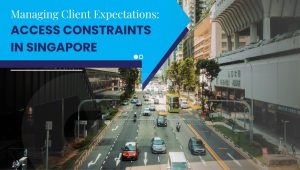
Singapore is known for its modern infrastructure and efficient urban planning, but when it comes to household goods moves, access challenges are still common, especially in high-rise residential buildings, older estates, and tightly packed neighbourhoods. For international agents coordinating moves into Singapore, pre-advising clients about these potential challenges is crucial for ensuring smooth deliveries, accurate expectations, and preventing surprise charges.
At CM Relocation, we regularly handle moves into all types of Singapore properties, from HDB flats and condominiums to landed homes. Based on our experience, here’s what agents should communicate to clients before their shipment arrives.
1. Condominium Access Restrictions and Booking Requirements
Most condominiums in Singapore enforce strict guidelines for moving activities. These rules vary by property, but they commonly include:
• Fixed Moving Hours
Typical allowable timeframes are:
Monday to Friday: 9 AM – 5 PM
Saturdays: 9 AM – 1 PM
(Sundays and public holidays are usually restricted.)
Clients often assume deliveries can happen anytime, so early clarification prevents scheduling delays.
• Elevator Booking (Service Lift Reservation)
Many condos require residents to book a service lift in advance—sometimes 3 to 7 days before the move. Without this, movers may not be allowed to proceed, or deliveries may be delayed until a slot is available.
• Security Deposits
Condo management may require a refundable deposit (ranging from SGD 200 to SGD 1,000) to cover potential damage to common areas. Clients should be aware that:
- This must be paid before move-in
- Refunds typically take several days
Agents should advise clients to check with their building’s management office early.
2. Limited Access for Large Trucks
Singapore roads—especially those leading to older HDBs, inner-city condos, or narrow landed homes—often cannot accommodate large moving trucks.
• When Shuttle Services Are Required
A shuttle truck may be needed when:
- Roads are too narrow
- Height limits are in place
- Carpark clearance is restricted
- The building only allows small or medium-sized vehicles
This means the container/truck is parked at a suitable location, and a smaller vehicle transports goods to the residence. Clients should be aware that:
- Shuttle fees are chargeable
- Delivery time may increase due to multiple transfers
Agents must highlight this early, especially for large sea shipments.
3. No Direct Elevator Access to Unit
Even with modern buildings, not all properties have elevator access that leads directly to the client’s floor. Some examples include:
• Split-level apartments
• Lofts or maisonettes
• Walk-up apartments with no lifts (common in older estates)
In these cases, the moving team will need to carry items upstairs manually. This could result in:
- Additional stair-carry charges
- Longer delivery times
- Extra manpower required
Advising clients early helps avoid disputes when charges appear on final bills.
4. Tight Hallways, Small Doors, and Low Ceilings
Space constraints are common in many Singapore homes, particularly older HDB flats or compact condos.
• Items commonly affected:
- Oversized sofas
- Large wardrobes
- King-size bed frames
- Desks or tables that don’t dismantle
- Commercial-sized appliances
If items do not fit into elevators, hallways, or through the front door, movers may need to:
- Dismantle the furniture further (if possible)
- Use alternative access points
- Perform balcony/hoisting services (rare but sometimes necessary)
Agents should encourage clients to check measurements before shipping to avoid costly surprises.
5. Parking & Loading Bay Limitations
Many condominiums and HDBs require movers to use designated loading bays. Challenges include:
- Limited loading bay availability
- Strict booking systems
- Time limits for offloading
- Distance between loading bay and lift lobby
- Ramps or slopes restricting trolley movement
At some condos, trucks must wait until a loading bay frees up—even if the crew has arrived on time. Pre-advising clients helps them understand possible delays.
6. Renovation Works or Building Maintenance Schedules
It is not unusual for condos or HDB blocks to undergo:
- Lift upgrading
- Repainting works
- Corridor renovations
- Major structural maintenance
These can restrict access or make elevators temporarily unusable. Clients should be encouraged to check with their management office weeks before the move to avoid last-minute issues.
7. Weather Considerations
While Singapore is generally easy to navigate, heavy rainfall is frequent. This may:
- Delay moves from truck to building lobby
- Increase time needed for stair carries or shuttle operations
- Require additional wrapping for protection
Clients should understand that movers prioritise item safety, even if it extends the delivery window slightly.
8. Tips Agents Should Give Clients Before Moving to Singapore
To ensure a seamless move, agents should advise clients to:
Confirm building rules and book necessary facilities
Especially the service lift and loading bay.
Inform movers early about property type and location
Photos or videos help assess access.
Measure large furniture and doorways
This prevents costly fitting issues.
Expect potential shuttle or stair-carry fees
Especially in older buildings or narrow roads.
Communicate special handling needs in advance
Large art, pianos, aquariums, marble furniture, etc.
Be present or have someone available during delivery
Many condos require homeowners to be on-site.
Singapore is a modern city with excellent infrastructure, but access challenges still occur, especially in dense residential areas. By pre-advising clients correctly, agents can prevent misunderstandings, avoid surprise charges, and ensure a smoother, more efficient relocation experience.
At CM Relocation, we work closely with agents and clients to assess access conditions early, plan effectively, and deliver shipments safely and on schedule, no matter how complex the destination may be.