
Moving to the United States.
Preparing for your move to the United States? Shipping your belongings across borders involves more than arranging transportation. From customs declarations and shipment documentation to checking which household items can be imported, planning ahead can help avoid unnecessary delays.
In this guide, you'll find practical information to help you understand the requirements for bringing your household goods into the USA and prepare for your relocation.


Before You Ship: What You Need to Know
Before your household goods leave Singapore, it's important to make sure the required documents are prepared and your shipment is correctly declared.
For a standard household goods shipment, the following may be required:
- Copy of your passport
- Copy of your visa
- U.S. Customs Form 3299, Importer's Declaration
- U.S. Customs Supplemental Declaration for Unaccompanied Personal and Household Effects
- Inventory of your goods in English
- Ocean Bill of Lading or Air Waybill
- Power of Attorney
- Stamped I-94 form, where applicable
- ISF submission
Your inventory should provide clear descriptions of your belongings. Avoid using terms such as "Miscellaneous" or "Contents Unknown." If an item is listed as "PBO" or Packed by Owner, it should still have a descriptive item name.
For ocean shipments, the Importer Security Filing (ISF) must be submitted 24 hours before the vessel is loaded at the last foreign port. An incorrectly filed or missing ISF may result in customs examination holds and clearance delays.
You should also have arrived in the USA by the time your shipment arrives. Failure to do so may result in clearance delays and additional charges.
Moving Services Across the USA
CM Relocation provides door-to-door international moving services from Singapore to destinations throughout the United States. Our network covers all 50 states, helping you move to major destinations and cities across the USA.
Major destinations include:
Used household effects may qualify for duty-free entry when they:
- Have been in the owner's use and possession abroad for at least one year, and
- Will continue to be used by the owner in their new residence.
Items owned for less than one year may be subject to U.S. duties and fees. These items require a separate declaration, along with an itemised list showing the description, value and country of manufacture.
Let your moving team know if your shipment contains items purchased within the last year so the appropriate documentation can be prepared.
Shipping to the USA
Every international move is different. The right shipping method depends on the volume of your belongings, how quickly you need them, and your preferred balance between cost and transit time.

AIR FREIGHT
Ideal for essential belongings you need sooner, air freight serves as a faster alternative to ocean shipping, making it especially useful for smaller shipments or items required shortly after arrival.
SHARED CONTAINER/GROUPAGE
Ideal for smaller household shipments and partial loads, shared container shipping allows your belongings to split space with other cargo, making it a highly practical option for smaller volumes.
FCL – FULL CONTAINER LOAD SHIPMENTS
Designed for larger household moves, dedicated container shipping provides exclusive container space so your belongings are shipped securely in a container reserved entirely for your household goods.
LCL – LESS THAN CONTAINER LOAD SHIPMENTS
Suitable for shipments that don’t require a full container, consolidated shipping combines your belongings with other cargo, offering a flexible option for medium-sized loads.

Most household goods can be shipped as part of a relocation, but certain items have specific customs requirements.
Computers and electronic equipment generally have no special requirements when they have been owned for at least one year and are not intended for resale.
Antiques may require a certificate of antiquity showing their approximate production date. U.S. Customs may also order antiques to an approved appraiser for independent appraisal. Items generally need to be at least 100 years old to be considered antiques for duty-free admission.
Works of art may be duty-free when they form part of a household goods shipment, have been possessed by the owner for at least one year and are not intended for resale.
Silverware and ornaments may be duty-free when imported as part of normal household goods. Jewellery may require additional consideration depending on the circumstances of the shipment.
Some belongings can require additional documentation, permits, inspections or customs clearance procedures.
Alcohol requirements can vary depending on the U.S. state where you are moving.
Where legal entry is permitted, shipments may require a detailed inventory including:
- Type of alcohol
- Bottle size
- Alcohol content
- Value per bottle
- Manufacturer information
- Production address
- Brand name
- Quantity
- Packaging information
A state permit may also be required, and duties and taxes may apply.
Wine and alcoholic beverages are strongly discouraged for household goods shipments because some states prohibit entry and importing them may result in additional costs, examinations and delays.
Food, spices, pantry goods and animal feed are subject to U.S. Food and Drug Administration requirements.
Imported food requires FDA prior notice, and the required information must be submitted electronically within the applicable timeframe before the food arrives at the port.
Some foods and spices are prohibited, while shipments without the required information may face delays, fines or seizure.
For this reason, it is recommended that food is not shipped with household goods where possible.
Plants and seeds are prohibited.
Firearms acquired overseas require an approved U.S. Alcohol, Tobacco and Firearms permit before they can be imported.
Firearms should not be shipped without the required permit or included with household goods. They should instead be shipped separately through a firearms dealer.
Explosives and other dangerous goods are either prohibited or require special permits.
For personal use, prescription medicines may be allowed when accompanied by a doctor's prescription and limited to a 3 to 6 month supply.
Over-the-counter medicines may be shipped with household goods in reasonable quantities.
Illegal drugs are prohibited.

Bringing Your Vehicle to the USA?
Moving a car, motorcycle or trailer requires additional preparation.
Vehicles need to meet applicable U.S. Department of Transportation (DOT) and Environmental Protection Agency (EPA) requirements.
For conforming vehicles, documentation may include:
- Proof of ownership
- U.S. Title
- Certificate of Origin
- Vehicle Registration
- Manufacturer documentation confirming compliance
- DOT Form HS-7
- EPA Form 3520-1
Moving with Pets?
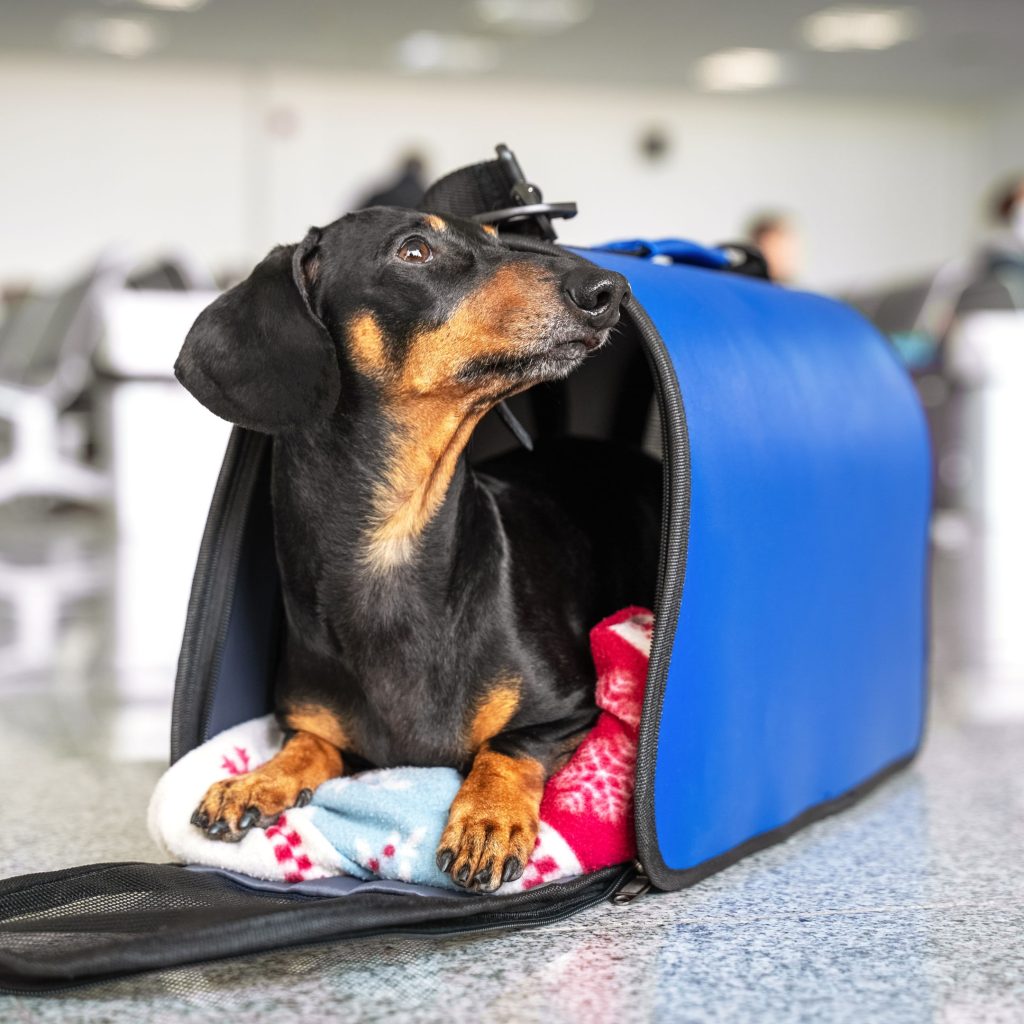
If you’re relocating with a pet, make sure the necessary arrangements are made before your move.
You may need proof of inoculation, and birds and exotic pets may be subject to quarantine requirements.
Advance arrangements may also be required for meeting your pet upon arrival, clearing it through customs and arranging kennel placement.

Wooden Packing Materials & ISPM-15
Wooden packaging entering the USA must comply with applicable ISPM-15 requirements.
Qualifying wooden packaging must receive the required treatment and display the appropriate certification mark.
The specified treatment includes either:
- Heat treatment, or
- Methyl bromide treatment
Certain processed wood products, such as plywood and some manufactured wood materials, are exempt from these requirements.
Documentation such as a relevant extract of the will, death certificate, inventory and letter of inheritance may be required.
May be subject to EPA requirements and should not be shipped without broker approval.
Manufacturer specifications should be provided to the broker for approval, as EPA and DOT requirements may apply depending on the engine size.
These are strongly discouraged and may require permits and examinations.
Certain materials, including ivory and unprocessed furs and skins, are prohibited.
Before your shipment leaves Singapore, make sure you have:
- Passport and visa copies
- Required U.S. customs declarations
- A detailed inventory in English
- Ocean Bill of Lading or Air Waybill
- Power of Attorney
- ISF submission arranged
- Recently purchased items identified
- Food and alcohol requirements checked
- Restricted items identified
- Vehicle requirements confirmed, if applicable
- Pet requirements confirmed, if applicable
- Wooden packing requirements considered
Moving to the USA involves customs declarations, detailed documentation, security filings and potential inspections. CM Relocation helps coordinate your move from packing and documentation in Singapore through customs clearance and delivery in the USA, helping make your international relocation smoother and more straightforward.
Planning your move to the USA?
Get a Moving Quote →Preparing your personal effects for shipping
Strict import laws mean there are some items you cannot bring in to the United States, while some other items will need to be inspected on arrival. As a professional moving company, we will provide all the necessary information and paperwork to assist with clearing your goods hassle-free. Having the expertise, knowledge and resources to move your anywhere in the United States is what sets us apart.
General FAQ for Moving to the USA
FREQUENTLY ASKED QUESTIONS
Used household goods may qualify for duty-free entry if they have been in your use and possession abroad for at least one year and will continue to be used in your new residence.
Yes. You should have arrived in the USA by the time your household goods arrive. If your shipment arrives before you, customs clearance may be delayed and additional charges may apply.
Food and pantry items are subject to U.S. requirements, and some foods and spices may be prohibited. Food shipments may also require additional processing and can lead to delays or extra costs, so it is recommended to avoid shipping food with your household goods where possible.
Yes, but vehicles must meet applicable U.S. Department of Transportation and Environmental Protection Agency requirements. You should obtain customs broker confirmation before shipping your vehicle.