
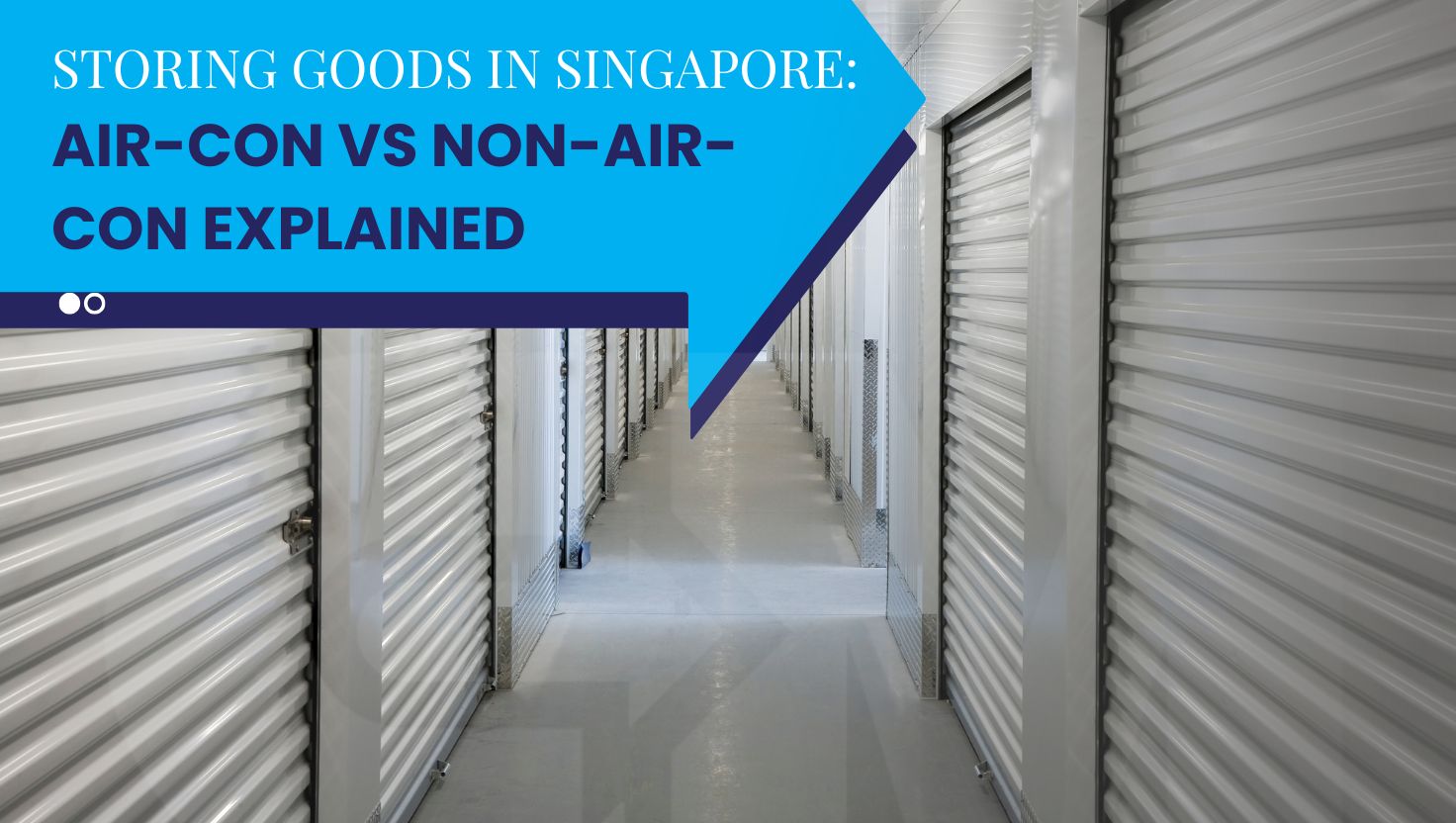
Aircon storage Singapore households choose is worth the extra cost for wooden furniture, leather, electronics, artwork and documents, especially beyond two months, because humidity averages around 82% a year. Sturdy items such as tools, plastics and luggage usually cope in non-air-conditioned storage for a short stay.
When moving to Singapore or renovating your home, storing your belongings safely is often part of the plan. Whether you need short-term or long-term storage, one of the first decisions you’ll have to make is choosing between air-conditioned storage and non-air-conditioned storage.
Both options have their advantages, but the right choice depends on what you’re storing, how long you’ll store it, and your budget.
Why does humidity matter for aircon storage in Singapore?
Humidity matters because Singapore’s relative humidity averages around 82% across the year, and monthly averages at Changi sit between roughly 81% and 86%, according to the Meteorological Service Singapore. Damp air lets wood warp, metal rust and fabric grow mould. Standard units offer no protection, which is why aircon storage Singapore owners use suits delicate items.
Left unprotected, stored belongings are at risk of:
- Mould and mildew
- Moisture absorption
- Rust and corrosion
- Warping of wood
- Damage to fabrics and leather
Choosing the right storage environment directly impacts how well your belongings are protected.
What is air-conditioned storage?
Air-conditioned storage is a unit or warehouse space where temperature and humidity are controlled, so your belongings are shielded from the damp outside. It suits wood, leather, electronics, artwork, instruments, documents and upholstered furniture. The only real downside is a slightly higher monthly cost, because of the energy used for climate control.
Best for:
- Wooden furniture
- Leather items
- Artwork and paintings
- Electronics
- Musical instruments
- High-value or sentimental items
- Documents, books, and archival materials
- Mattresses and upholstered furniture
Advantages of Air-Con Storage
1. Protection Against Humidity
Humidity is the biggest threat in Singapore’s climate. Air-con storage significantly reduces mould, mildew, and warping.
2. Longer Lifespan for Delicate Items
Electronics, artwork, and leather retain their condition when stored in a stable environment.
3. Clean and Dust-Controlled
Air-conditioned environments tend to be cleaner with better air quality.
4. Ideal for Long-Term Storage
If you’re storing items for two months or more, air-con is usually the safer choice.
Downside
- Slightly higher cost due to energy consumption and climate control.
What is non-air-conditioned storage?
Non-air-conditioned storage is a standard unit with no temperature or humidity control. It costs less and suits sturdy items such as metal, plastics, tools, garden equipment and luggage, particularly for short stays of a few weeks or months. It is a poor fit for anything that can warp, rust or grow mould.
Best for:
- Metals and plastics
- Tools and hardware
- Outdoor or garden equipment
- Luggage
- Non-sensitive items
- Short-term storage needs
Advantages of Non-Air-Con Storage
1. Lower Monthly Cost
This is the most budget-friendly option.
2. Perfect for Sturdy Items
Not everything requires climate control. Durable household goods store perfectly well here.
3. Good for Short-Term Needs
If stored for only a few weeks or months, many items will be completely fine.
Downside
- High humidity may affect sensitive materials
- Increased risk of mould, rust, and warping for certain items
- Not ideal for long-term storage of valuables
How does air-con storage compare with non-air-con storage?
Air-con storage controls humidity and temperature, protects better against mould and suits long stays. Non-air-con storage costs less and suits durable goods kept briefly. Security is the same in both when the facility is the same. The table below sets out the differences feature by feature, so you can match each item to a unit type.
| Feature | Air-con storage | Non-air-con storage |
|---|---|---|
| Humidity control | Yes | No |
| Temperature control | Yes | No |
| Cost | Higher | Lower |
| Mould protection | High | Low |
| Best for | Furniture, electronics, artwork, leather, documents | Tools, plastics, luggage, durable goods |
| Ideal duration | Long-term (two months or more) | Short-term (under two months) |
| Security level | Same, depends on the facility | Same, depends on the facility |
Which storage option should you choose?
Choose by three factors: what you are storing, how long you will store it, and your budget. Put anything that can warp, rust or grow mould into air-con storage, particularly beyond two months. Keep sturdy, low-value items in non-air-con units for short stays. If an item is hard to replace, the extra cost is usually worth paying.
1. The Type of Items You Are Storing
Choose Air-Con If You Have:
- Wooden dining tables, chairs, cabinets
- Leather sofas or bags
- High-end musical instruments
- Sensitive electronics
- Antiques or artwork
- Important documents
Humidity can destroy these items quickly, sometimes in weeks.
Choose Non-Air-Con If You Have:
- Plastic storage bins
- Tools and sports equipment
- Bikes and gym equipment
- Goods made of metal
These can withstand humidity better.
2. How Long You Need Storage
- Short-term (under 2 months):
Non-air-con is often enough for most belongings. - Long-term (2 months and above):
Air-con storage greatly reduces deterioration for important items.
3. Your Budget
Air-con storage costs more, but it can save you money long-term by preventing damage.
If your stored items are expensive or difficult to replace, the extra cost is worthwhile.
What does CM Relocation offer for storage in Singapore?
CM Relocation offers both air-conditioned and non-air-conditioned storage, handled with professional packing and recorded condition checks. Items are catalogued on entry and exit, and facilities have 24/7 monitoring and restricted access. Short-term and long-term plans are available for relocation, renovation or temporary holding. A free assessment will confirm which unit type your items need.
Here’s what makes our storage services different:
Warehouse-Grade Security
24/7 monitoring, restricted access, and secure packing.
Professional Packing for Storage
We use export-grade materials to protect items from dust, moisture, and scratches.
Condition Checks & Inventory
Every item is catalogued upon entry and exit for clear tracking.
Short-Term and Long-Term Options
Flexible plans tailored to relocation, renovation, or temporary holding, including aircon storage Singapore customers can book short or long term. See plans on our storage page.
Clean, Pest-Controlled Facilities
Regular maintenance keeps your belongings safe and clean.
Handling for Fragile & High-Value Items
Special technicians handle delicate furniture, antiques, and glass.
Storing belongings in Singapore means planning for heat and humidity. Non-air-con units suit durable, short-term items. Aircon storage Singapore owners rely on for valuables protects delicate furniture, electronics and long-term deposits. If you are unsure, CM Relocation can assess your items and recommend a unit type. Request a free assessment and storage quote.
When should you ask for advice on aircon storage in Singapore?
If you are unsure which unit your belongings need, ask before you book. A free assessment looks at what you are storing, how long it will stay and what the items are worth, then recommends the most protective and cost-effective option. For longer stays, ask whether your goods are covered by moving insurance while in storage, and read more on our storage services page.
Frequently asked questions
What is aircon storage in Singapore?
Aircon storage in Singapore is a storage space with controlled temperature and humidity, so belongings are not exposed to the damp outside. It is used for wooden furniture, leather, electronics, artwork, instruments, mattresses and documents. It costs slightly more than standard storage because of the energy used for climate control.
Is aircon storage Singapore households use worth the extra cost?
For delicate or valuable items, yes. Singapore’s humidity averages around 82% a year, which can warp wood and cause mould on leather and fabric within weeks. The extra monthly cost is usually smaller than replacing damaged furniture or electronics. For tools, plastics and luggage kept briefly, standard storage is usually enough.
Which items need air-conditioned storage?
Wooden dining tables, chairs and cabinets, leather sofas and bags, musical instruments, sensitive electronics, antiques, artwork, important documents, books, mattresses and upholstered furniture all benefit from air-conditioned storage. Anything that can warp, rust or grow mould should go in a climate-controlled unit rather than a standard one.
How long can I keep items in non-air-con storage?
For stays under about two months, non-air-con storage is often enough for most belongings, and many sturdy items cope for longer. Once storage runs beyond two months, air-con storage reduces deterioration of important items. Keep delicate pieces in air-con from the start if you are unsure how long you need.
Does humidity damage furniture in storage?
Yes. In Singapore’s humid climate, wooden furniture can warp and leather can develop mould, sometimes within weeks. Proper packing helps, but climate control is the main protection. Metal items can rust in standard units. Sturdy items such as plastic bins and tools cope far better than wood, leather or electronics.
Is security different in air-con and non-air-con storage?
No. Security depends on the facility rather than the unit type, so air-con and non-air-con units at the same site have the same level of protection. At CM Relocation, facilities have 24/7 monitoring and restricted access, and every item is catalogued when it enters and leaves.
Can I store belongings for just a few weeks?
Yes. CM Relocation offers short-term and long-term storage plans for relocation, renovation or temporary holding. For a few weeks, many sturdy items are fine in non-air-con storage, while delicate pieces are better in air-con. Request a free assessment and the team will recommend a unit type.
How do I get an aircon storage quote?
Contact CM Relocation for a free assessment and storage quote. The team will look at your items, how long you need storage and your budget, then recommend the most protective and cost-effective option. A written quote lets you compare unit types before you commit to a plan.
Contact CM Relocation today for a free assessment and storage quote.