
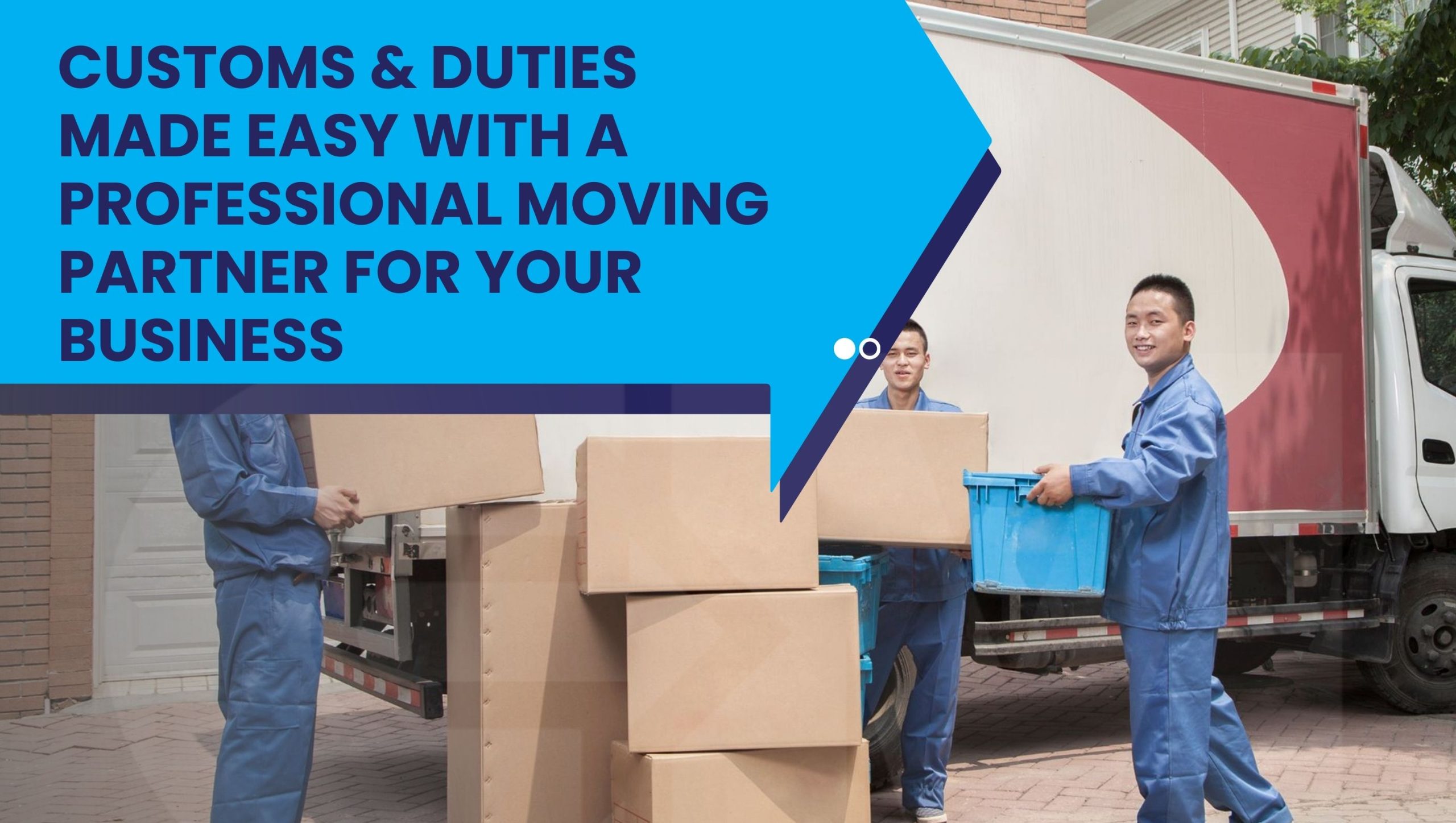
Customs clearance for international moves is the process of declaring your goods to the destination country’s customs authority, paying any duties and taxes due, and receiving permission to release them. For a business relocation, accurate paperwork and a plan for duties are what keep equipment, inventory and machinery from being delayed.
Relocating office equipment, inventory or machinery across borders brings opportunity, but also regulatory complexity. Mishandled customs procedures can mean costly delays, fines or even confiscation of goods. This guide explains how customs clearance for international moves works for businesses and how a professional moving partner helps.
Why is customs clearance for international moves so complex?
Customs clearance for international moves is complex because rules differ by country and change with the type, value and origin of the goods. Duties, taxes and import restrictions all vary, and even a simple shipment can stall if documentation is incomplete or incorrect.
For businesses, the consequences of mishandling customs include delayed shipments, disrupted operations, unexpected fees and even legal issues. Managing customs in-house can be time-consuming and risky, particularly for SMEs without a dedicated logistics team.
Singapore gives a useful example of how formal the process can be. Singapore Customs states that imports must be declared to it, and that permits are submitted through its TradeNet system by a Declaring Agent or a registered business. Its importing goods overview also says supporting trade documents must be kept for five years from the permit approval date. Other countries have their own systems, so check the current rules for your destination.
What are the steps in customs clearance for international moves?
The steps in customs clearance for international moves are broadly the same everywhere: prepare the documents, classify the goods, submit the declaration, pay duties and taxes, and obtain release. The detail differs by country, so follow the destination authority’s own process.
Using Singapore Customs as an example, its import process includes these stages:
- Register the business and activate a Customs account.
- Check whether the goods are controlled, using the description or HS code.
- Arrange payment of duties and taxes, directly or through a Declaring Agent.
- Submit the import permit through TradeNet, using a Declaring Agent or registered business.
- Clear the goods, presenting the documents the cargo type requires.
- Keep supporting trade documents for five years.
Which documents does customs clearance for international moves need?
A business typically needs a commercial invoice, a packing list and a transport document such as a Bill of Lading or Air Waybill, plus any permits for controlled goods. Singapore Customs, for instance, names the invoice, packing list and Bill of Lading or Air Waybill as supporting documents.
| Document | What it does |
|---|---|
| Commercial invoice | Records what is being shipped and its value, which customs uses to assess duties and taxes |
| Packing list | Itemises the contents of each package so customs can check the shipment against the declaration |
| Bill of Lading or Air Waybill | The transport document for sea or air cargo, issued by the carrier |
| Customs declaration or import permit | The formal declaration submitted to the customs authority |
| Permits for controlled goods | Required where an item is restricted or controlled in the destination country |
Incomplete paperwork is one of the leading causes of customs delays, so check every document against the packing list before shipping.
How can a professional moving partner help with customs clearance?
A professional moving partner guides a business through each stage of the international relocation process, helping with regulations, documentation, clearance, costs and risk. This lets your team keep running the business while the shipment is managed. The main areas of help are:
- Expert guidance on regulations: Experienced movers know import and export regulations in multiple countries and can advise on documentation, duty exemptions and restricted items.
- Accurate documentation: Invoices, packing lists and customs declarations are prepared accurately and submitted on time, avoiding costly delays.
- Efficient customs clearance: The right expertise can speed up clearance, which matters for time-sensitive shipments and critical business equipment.
- Cost management: Movers can help you anticipate tariffs, duties and taxes and optimise shipments to reduce unnecessary expense. They may also advise on duty relief programmes or exemptions that apply to certain goods.
- Risk mitigation: Insurance options and risk management strategies protect goods in transit and during customs inspections.
CM Relocation can support businesses with customs and duties, helping move equipment, inventory and office assets compliantly. See our international moving services for the full range.
What are the common challenges in customs clearance for international moves?
The most common challenges in customs clearance for international moves are unfamiliar regulations, incorrect or missing documents, unexpected duties and taxes, and the logistics of coordinating transport, warehousing and customs at once. Most can be prevented with early planning and an experienced partner.
- Unfamiliar regulations: Each country has its own rules on what can be imported and exported. Misunderstanding them can cause delays or confiscation.
- Incorrect or missing documentation: Incomplete paperwork is a leading cause of delay.
- Unexpected duties and taxes: Miscalculating duties or taxes can hit your budget and cash flow.
- Logistical complexity: Coordinating transport, warehousing and customs at the same time takes experience and resources.
Our guide to customs documentation for moving abroad covers the paperwork side in more detail.
Why do SMEs benefit most from help with customs clearance for international moves?
SMEs and growing businesses benefit most because small teams rarely have the time or expertise to handle international regulations themselves. Outsourcing customs clearance for international moves gives access to specialist knowledge without hiring full-time logistics or compliance staff, which suits businesses with limited resources.
Moving partners can also scale their services. Whether you are relocating a single office or an entire warehouse, they can tailor the service to your size, budget and timeline. That flexibility helps businesses expanding internationally without overextending resources.
How do you choose the right moving partner for customs clearance?
Choose a moving partner by checking its experience with international business moves, the range of services it covers, how clearly it explains costs, and how well it communicates. Ask directly how it handles customs clearance for international moves and who is responsible for each step.
- Experience and reputation: Look for proven experience in international business relocations.
- Range of services: Look for packing, shipping, customs clearance and insurance in one service.
- Transparency in costs: Make sure fees, duties and potential extra costs are clearly outlined.
- Customer support: Reliable communication during the move lets you resolve issues quickly.
Also check what moving insurance covers, since goods can be held for inspection or delayed in transit.
Frequently asked questions
What is customs clearance for international moves?
It is the process of declaring your goods to the destination customs authority, paying any duties and taxes due, and getting authorisation to release the shipment. For businesses it covers equipment, inventory and machinery, and depends on correct documentation and compliance with local rules.
Who handles customs clearance for international moves?
Either your own team or a professional moving partner, often through a licensed agent in the destination country. Many businesses outsource it because the rules are complex and mistakes are costly. Agree in writing who handles each step before the move begins.
What documents are needed for customs clearance?
Typically a commercial invoice, a packing list, a transport document such as a Bill of Lading or Air Waybill, and a customs declaration. Controlled or restricted goods may need extra permits. Requirements differ by country, so confirm them with the destination customs authority.
What causes customs delays on international moves?
Incorrect or incomplete paperwork is one of the leading causes of delay. Others include unfamiliar import restrictions, wrongly calculated duties and taxes, and poor coordination between transport, warehousing and customs. Careful preparation and an experienced partner help prevent most of these problems before the shipment reaches the border.
Do businesses pay duties and taxes when relocating goods abroad?
It depends on the destination, the goods and their value. Some goods qualify for duty exemption or relief and others do not. Singapore Customs, for example, says GST and duty may apply to imports unless an exemption or relief applies. Check the current rules for your destination.
Can a mover reduce the cost of customs clearance for international moves?
A mover cannot change the legal duty rates, but it can help you anticipate costs, prepare accurate documents and advise on relevant exemptions or relief programmes. Accurate declarations also help you avoid the extra fees and fines that follow mistakes in the paperwork.
Why is customs clearance riskier for SMEs?
Small teams often lack dedicated logistics or compliance staff, so a paperwork error can disrupt the whole operation and affect cash flow. Outsourcing customs clearance for international moves gives SMEs specialist knowledge without the cost of hiring full-time staff or building an in-house team.
How early should a business plan customs clearance?
Start customs clearance planning when you begin planning the move, ideally several months ahead. Early planning leaves time to check import rules, classify goods, gather documents and arrange permits. It also lets you build duties and taxes into the relocation budget before quotes are signed.
Get support for your business move
Expanding your business internationally? Get a relocation quote and let CM Relocation provide support for customs and duties, helping your equipment, inventory and office assets move smoothly and compliantly while minimising risks and delays.