
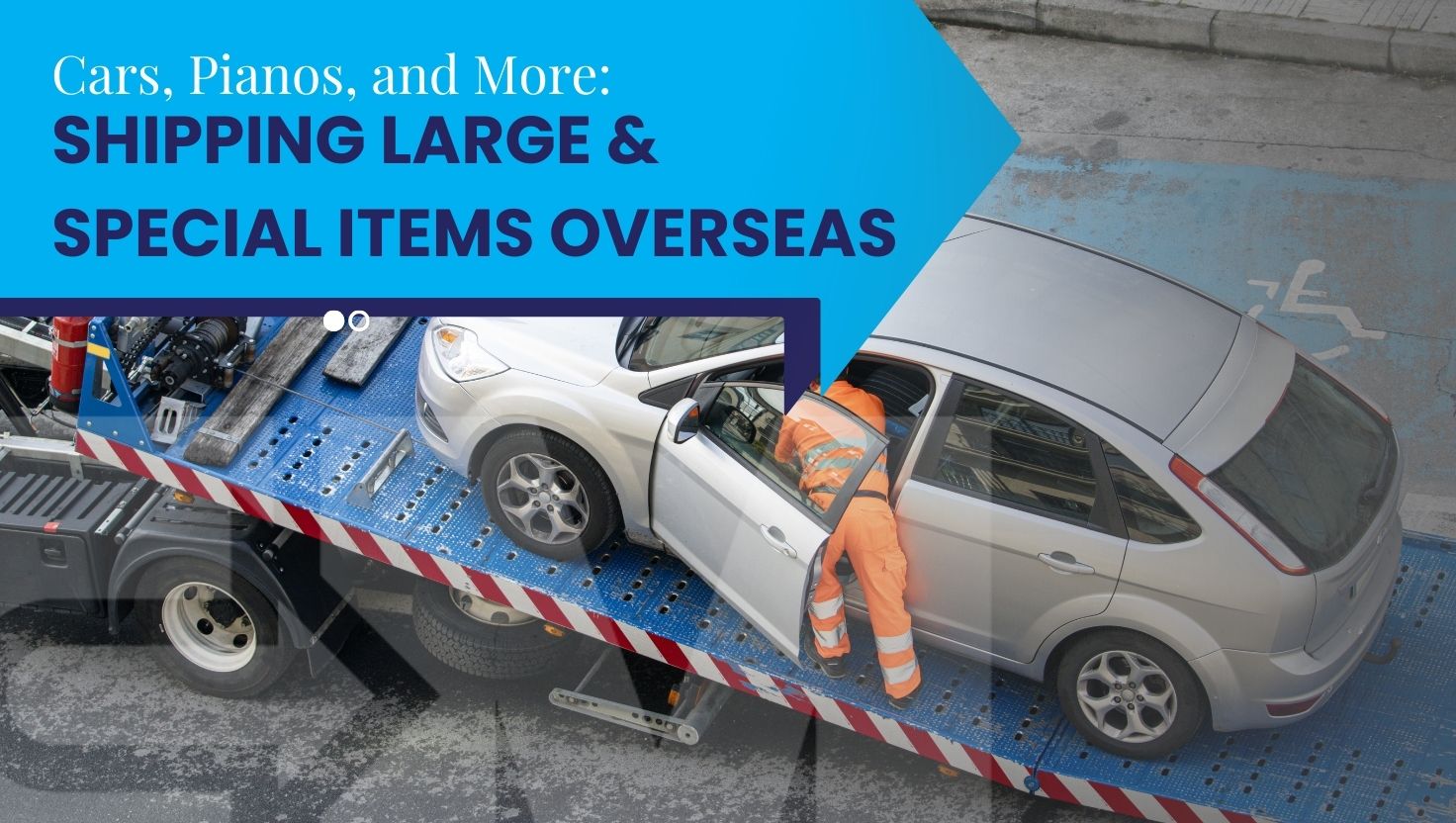
Shipping large items overseas means moving cars, pianos, motorbikes, boats and oversized furniture across borders with custom crating, customs paperwork and insurance that ordinary household boxes do not need. Plan early, choose the right shipping method for each item, and use a mover that handles the whole route from pickup to delivery.
Cars, pianos and other big pieces often carry practical and sentimental value, and for many families leaving them behind is not an option. At CM Relocation, we help clients with shipping large items overseas as part of our overseas moving services. This guide covers the challenges, the options for each item and how to prepare.
What is involved in shipping large items overseas?
Shipping large items overseas involves assessing each piece, packing it in a purpose-built crate or securing it for transport, completing export and import documents, clearing customs and arranging delivery at the other end. Each stage differs from a standard household move because size, weight and fragility limit your options.
Unlike boxes of clothing and kitchenware, big or unusual items bring their own challenges:
- Size and weight limits: not every container or carrier can take unusually large items.
- Fragility: a piano needs careful handling to protect its strings and woodwork.
- Customs rules: vehicles and some equipment need extra paperwork and may attract duties.
- Specialised packing: heavy or delicate pieces need custom crates, padding and secure strapping.
- Delivery access: getting a grand piano into a high-rise flat, or a car through port clearance, takes coordination.
Each of these can be managed when shipping large items overseas with proper planning and expert support.
Why consider shipping large items overseas instead of replacing them?
People choose shipping large items overseas rather than replacing them mainly for sentimental value, cost and fit. A family piano or heirloom cannot be bought again, and a customised vehicle or good instrument can cost more to replace abroad than to ship, once you compare the full price of each option.
- Sentimental value: a family piano or heirloom furniture may hold memories that cannot be replaced.
- Cost considerations: buying a new car, boat or high-quality instrument abroad may cost more than shipping, particularly when you factor in the hidden costs of an international move.
- Special adaptations: some vehicles or equipment are already customised for your needs.
- Continuity and comfort: familiar belongings help ease the transition into a new country.
How do you ship a car overseas?
When shipping large items overseas such as cars, you choose between Roll-on/Roll-off (RoRo) and container shipping, then supply registration, proof of ownership and import permits. RoRo drives the vehicle onto the ship, while a container gives more protection and can carry belongings alongside the car. Your budget and the level of protection decide the choice.
Choosing between the two is similar to the decision between air freight and sea freight for an international move: cost, speed and protection pull in different directions. Whether the car is for daily use or a collector’s piece, it needs expert care in transit.
| Method | How it works | Best suited to |
|---|---|---|
| Roll-on/Roll-off (RoRo) | The vehicle is driven onto the ship and secured in place | Cars and motorbikes where budget matters most |
| Container shipping | The car is secured inside a container, sometimes alongside personal belongings | Valuable or collector’s cars and owners who want more protection |
Key points to check before you book your car:
- Documentation: vehicle registration, proof of ownership and import permits are required.
- Compliance: some countries apply strict emissions or safety standards that a vehicle must meet.
- Insurance: cover for the journey is essential, so review moving insurance before you ship.
How do you transport a piano overseas?
You transport a piano overseas by having it assessed, crated with heavy-duty padding and moisture protection, moved with proper lifting equipment and shipped in conditions that limit temperature and humidity swings. A piano is not just heavy, it is also one of the most delicate items to move, so even minor mishandling can affect its sound.
The usual steps are:
- Assessment: identify the type (upright, baby grand or grand) and plan how it leaves the property.
- Specialised packing: use custom crating, heavy-duty padding and moisture protection.
- Handling: teams use dollies, lifts and ramps to move it without injury or damage.
- Climate planning: extreme changes in temperature or humidity can affect the wood and strings.
Other instruments, such as violins, guitars and drum kits, also need careful packaging and climate-sensitive shipping to protect them. Depending on the destination and shipping method, a piano can take roughly 4 to 12 weeks to arrive.
Can boats, motorbikes and sports equipment be shipped overseas?
Yes, boats, motorbikes and sports equipment can all be part of shipping large items overseas, but each needs its own approach. Motorbikes are crated or sent by RoRo, small boats are crated or containerised, and bulky gear must be packed securely and declared for customs. Larger vessels may need specialised arrangements.
- Motorbikes: crated for safe shipping or sent by RoRo, and batteries may need to be disconnected for safety.
- Boats: small boats can be crated or containerised, while larger vessels may require specialised shipping arrangements.
- Sports equipment: oversized gear such as surfboards, kayaks or gym equipment must be carefully packed and declared for customs clearance.
How should oversized furniture and art be shipped?
Oversized furniture and art should be shipped with extra protection: furniture is often disassembled, wrapped in padding and shrink-wrap, while artworks and antiques go in custom crates with shock-absorbing material and temperature control. Value matters too, because standard moving insurance may not cover high-value pieces.
- Furniture: disassembly may be needed for easier transport, and proper packing helps prevent damage on long journeys.
- Artwork: paintings, sculptures and antiques need custom crates, shock-absorbing materials and temperature control.
- Insurance: cover for high-value items is critical, as standard moving insurance may not apply.
What customs rules apply when shipping large items overseas?
Customs rules depend on the destination, but most countries expect a declaration, supporting documents and any duties or taxes due. Vehicles and controlled goods often face extra checks. Ask your mover which documents your destination needs, and check the official customs pages before you ship.
As an example from Singapore, Singapore Customs states that importers must make a declaration, that permit applications are submitted through TradeNet, and that controlled goods may need approval from other authorities. Check the Singapore Customs importing goods overview for the current position.
In the United Kingdom, the UK government explains that imported vehicles must be declared, that VAT and customs duty may be due, and that a vehicle must be approved and registered before use on public roads. Read the official guidance on importing vehicles into the UK. Rules change, so check the current requirements as of October 2026 for your own destination.
What does a professional mover do when shipping large items overseas?
A professional mover handles the crating, lifting, transport, customs and delivery that make shipping large items overseas safe. Attempting it alone can be risky, because heavy or fragile pieces need specialist equipment and experience, plus paperwork that spans several countries and carriers.
Professional international movers like CM Relocation provide:
- Custom crating solutions for oversized or fragile items.
- Experienced teams trained to handle heavy lifting and delicate equipment.
- Specialised transport equipment such as forklifts, cranes and dollies.
- End-to-end logistics support including customs clearance, port handling and delivery.
The aim is that your most valuable possessions stay in expert hands from pickup to delivery.
How do you prepare large items before shipping?
Before shipping large items overseas, document their condition, service vehicles, secure loose parts, label fragile pieces and tell your mover about special handling needs well in advance. Good preparation supports insurance claims, speeds up packing and reduces the risk of damage or delay.
- Document everything: photograph vehicles, instruments and art before shipping, for insurance purposes.
- Service vehicles: make sure cars and motorbikes are in good condition with minimal fuel in the tank.
- Secure loose parts: pack removable components of furniture or equipment separately.
- Label items: clearly mark fragile or valuable pieces for extra care.
- Discuss requirements: tell your mover about special handling needs well in advance.
Frequently asked questions
Is it worth shipping a car abroad?
Often yes. When shipping large items overseas, a car is worth moving, especially if the car has sentimental value, unique features or would cost a lot to replace abroad. Compare the full cost of shipping, import duties and registration against buying locally, because rules and taxes vary by country. Ask for a written quote before you decide.
How long does it take to ship a piano overseas?
Depending on the destination and shipping method, shipping a piano overseas can take roughly 4 to 12 weeks. Allow extra time for crating, customs clearance and delivery arrangements at the other end, particularly if the piano must be carried up stairs or lifted into a high-rise building.
Do I need extra insurance for large and special items?
Yes. When shipping large items overseas, comprehensive insurance for high-value or fragile pieces protects you throughout the journey, and standard moving insurance may not apply to valuable pieces. Ask your mover exactly what is covered, and photograph every item beforehand so any claim is easier to support.
What is the difference between RoRo and container shipping for cars?
With RoRo, the car is driven onto the ship and secured in place. With container shipping, it is secured inside a container, sometimes alongside personal belongings, which gives more protection. Your budget and how much protection the vehicle needs usually decide which suits you.
Can I ship a boat or motorbike overseas?
Yes. Motorbikes can be crated or sent by RoRo, and batteries may need to be disconnected. Small boats can be crated or containerised, while larger vessels may need specialised arrangements. Both must be declared for customs, so speak to your mover early about the best method.
Why is shipping large items overseas more complicated than a normal move?
Shipping large items overseas is more complicated because size, weight and fragility limit which containers and carriers you can use. Vehicles and special equipment also bring extra customs paperwork, and delivery at the destination can need lifting gear, port handling and careful access planning.
How should I pack a fragile antique or artwork for shipping?
Fragile antiques and artworks should go in custom crates with shock-absorbing materials and temperature control, rather than ordinary boxes. A professional mover can build the crate to fit the piece. Photograph the item first and confirm that your insurance covers its value.
When should I start planning to ship large items overseas?
Start as early as you can, ideally as soon as your move date is known. Big items need assessment, crating, documents and carrier space, and they may be shipped separately from your household goods. Early planning when shipping large items overseas lowers the risk of delays and last-minute costs.
Ready to ship your large items
Planning ahead is the biggest factor in shipping large items overseas without damage or delay. At CM Relocation, we specialise in handling these unique challenges, so every item, no matter how big or delicate, reaches its new home securely. Request a quote to discuss what you need to ship.